
Churches and places of worship
Church cleaning built around the week, not the weekday
A church building concentrates most of its week into a few hours on Sunday. DC Commercial Cleaning discusses the sanctuary turnaround, fellowship hall, kitchen, classrooms and restrooms, then builds a routine around Saturday preparation, the Sunday afternoon reset and whichever midweek groups use the building.
The weekly shape
A building with one very busy day
Most commercial buildings spread their use evenly across five weekdays. A church inverts that. A few hours on Sunday morning carry more people through the doors than the rest of the week put together, and by Tuesday the corridors are close to empty. A plan copied from an office spends money where nobody is standing.
Placement therefore matters more than frequency. Two well-placed visits leave a building in better condition than four badly placed ones, because what is judged is the sanctuary and the restrooms at nine on Sunday morning.
Two anchor visits
Saturday preparation and the Sunday turnaround
Most of the weight sits at the weekend, in two short and quite different visits.
Saturday is preparation. Floors and aisles, pews or stacked seating, entrance glass, and restrooms stocked for a crowd rather than a weekday trickle. It decides what a first-time visitor sees, and it absorbs whatever Friday evening's group left behind.
Sunday afternoon is recovery, a different list: coffee and crumbs through the fellowship hall, a kitchen used at speed by volunteers, and restrooms that took a whole congregation inside ninety minutes. Neither visit is a full building clean, which is what makes the pattern affordable. A recurring janitorial services plan places the two of them.
Shared building
Midweek groups, hall hires and shared use
The weekday building is rarely idle. It is used by people who are not the congregation: a food programme on Monday, a choir rehearsal on Wednesday, a paid hall hire on Friday. Each leaves a different state behind.
That is a scoping question, not a housekeeping one. A hall booked for a birthday party and a hall used for a midweek meal are not the same job. Listing who books which evenings, and what the hire agreement asks of them, turns that into something a budget can hold.
Send the booking sheet
Which rooms are hired, on which evenings, and what each group is expected to leave behind. A booking sheet answers more scoping questions than a floor plan does.
Share how the building is usedThree different rooms
Sanctuary, fellowship hall and classrooms need different care
One building, three rooms, three sets of rules that do not transfer between them.
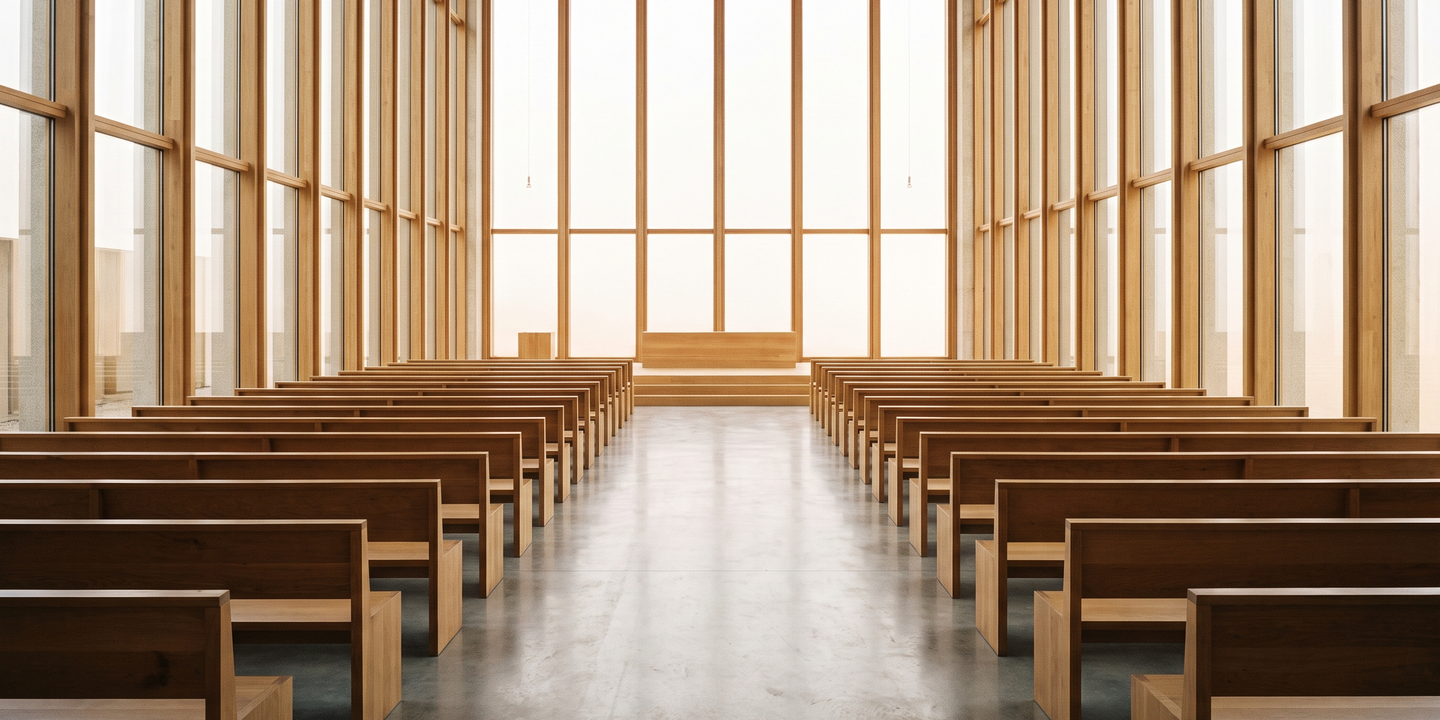
The sanctuary carries the most caution. Pews and the floor beneath them hold more than they appear to, aisles wear along a single line, and candle wax, communion residue and flower debris recur every week. Historic woodwork, memorials, brass and instruments should be named as excluded. DC Commercial Cleaning is not a conservator: we claim no restoration skill, no historic-fabric expertise and no competence with organs or instruments, and we are not affiliated with any denomination. Name what your building treats as irreplaceable and who looks after each piece, and the scope stops short of them.
The fellowship hall is the opposite kind of room: flexible, hard-floored, flipping between dining, meeting and children's use, with a volunteer kitchen attached. If children's rooms are the main question, daycare cleaning covers that ground. Where a building has a safeguarding policy it governs who may be inside and when, and we hold no clearance of our own to set against it: state the rule and the visit sits outside it. A one-time deep cleaning resets all three at once.
The boundary
Where volunteers finish and a contractor starts
Most churches already clean themselves to some degree. A team stacks chairs after coffee, someone wipes the kitchen, a rota takes the restrooms in turn. A contractor supplements that rather than replacing it, and the failure is almost never effort. It is assumption: both sides believing the other has the restrooms this week.
So write the split down, room by room, marking which tasks belong to the rota and which are paid for. It usually lowers the quote rather than raising it, because the scope stops paying for work already done well. Restroom cleaning is the piece most often moved across the line, since Sunday volume is what a rota struggles to absorb.
Cost and approval
Budgets, frequency and the committee that approves them
The spending decision usually goes to a board, a vestry or a finance committee meeting monthly, so the quote has to be legible to people who do not manage buildings for a living. Ranges, what moves them and what could be dropped in a lean year are more useful to that room than a single confident number.
Two anchor visits cost differently from a weekday routine of the same hours, and the fellowship hall, kitchen and classrooms can each be added or left out. Restroom fixtures matter more than square footage, because Sunday volume lands on them.
Recurring office-cleaning guide range per sq ft. Many factors apply and each price is customised for the location. Visit the pricing guide for the published guide ranges and their context.
Congregations across Washington, DC and out to Silver Spring, MD can be visited on this weekend pattern. An office answers to a budget holder sitting inside the building rather than a committee meeting monthly, and work falling outside any weekly routine is described under general commercial cleaning.
Answers for church administrators
Church cleaning FAQs
Raised most often by property committees weighing a first paid arrangement.
Can cleaning happen on Saturday and after Sunday services?
Yes, and for most congregations that is where the visits belong. Saturday sets the building up for the week's largest gathering, and a Sunday afternoon pass clears the hall, kitchen and restrooms.
How do you handle historic woodwork, pews and memorials?
By naming them as excluded unless you instruct otherwise in writing. Older timber, memorials, brass and instruments are usually cared for by someone who knows them, and no product goes near them without that person agreeing first.
Can a church use cleaning only for peak weeks or events?
Yes. Occasional work is quoted on its own, so a building can be reset before a festival or a wedding without committing to a weekly routine.
What if outside groups use the building midweek?
Tell us who they are and which evenings they book. A hall left by a hired group is a different job from one left after a church meeting.
How do you split work between volunteers and a cleaning service?
Room by room, written down before anything is quoted. Whatever the rota covers reliably stays with it, and the paid scope fills the gaps.
Next step
Send the Sunday schedule and the volunteer rota.
Service times, the rooms in use midweek, what the rota already covers and who signs the budget off. A church scope is drafted from those four answers.
Request a quote